

By Kara Baskin
Now, anyone with a TikTok account can become a creator overnight. Social media doubles as entertainment. Influencers are celebrities. Streaming services have supplanted movie theaters. Artificial intelligence looms.
“The entire ecosystem is upside down,” said Herzog, a longtime member of Emerson’s Board of Trustees and new Chair. “You can make something and have it on YouTube by tomorrow.”
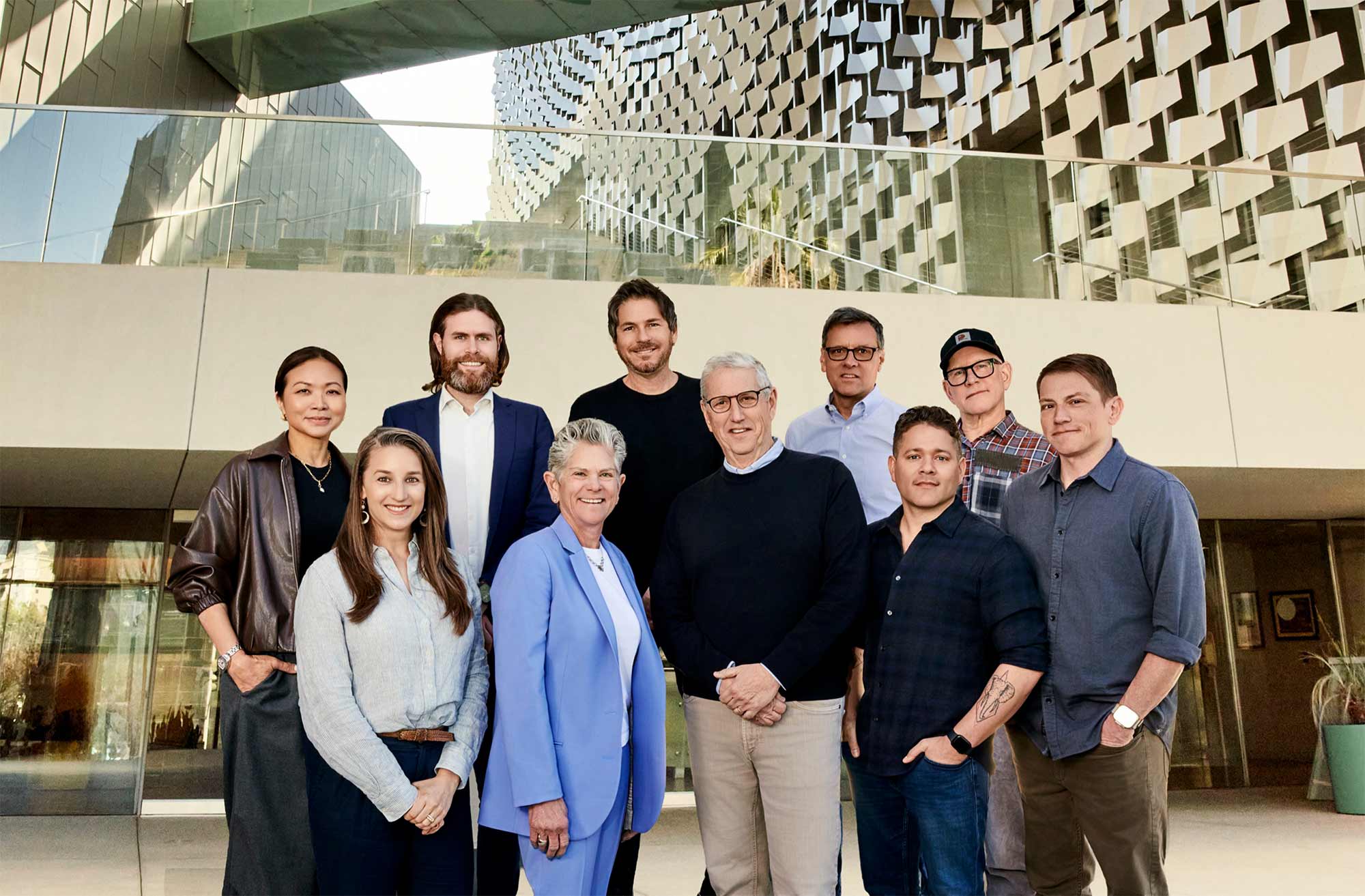
That shakeup energizes and challenges the Emerson Board, who has welcomed 13 new Trustees over the last two years.
“The landscape is literally giving way under our feet and being rebuilt as we’re on it,” said Crazy Rich Asians screenwriter Adele Lim ’96, LHD ’22, who joined the Emerson Board of Trustees last year. “The traditional studio structure has come apart, and we have yet to see how that’s going to come together. The industry is reshaping itself.”
To address these challenges and boldly lead Emerson into its 150th year, Emerson President Jay Bernhardt, supported by Emerson Trustees, launched Extraordinary Emerson 2030, the College’s strategic plan, in March 2025, following a yearlong community-wide effort. Doubling down on the institution’s founding commitment to communication and the arts, the strategic plan lays out four priorities: Academic Innovation, Collaborative Connections, Community Engagement, and Operational Excellence.
Today, Trustees see their directive as twofold: preserving Emerson’s mission as the premier hands-on training ground for artists, communicators, and creators while offering close mentorship, access, and connections for this new world.
“There will always be a demand for content. With all these different platforms, the question for the industry is how to monetize it,” Lim said. “Where Emerson excels, and I’m very invested in this as a creative, is about fostering that energy and output.”
Innovating in the face of challenge is an Emerson hallmark and the College’s Trustees are up to the challenge.
“The new set of Trustees bring with them excitement, enthusiasm, and a swagger about Emerson,” said outgoing Board Chair Eric Alexander ’78, LHD ’26, referencing relative newcomers, such as Lim; screenwriter, producer, and New York Times bestselling author Seth Grahame-Smith ’98; and Sam Presti ’00, president of the NBA Champion Oklahoma City Thunder.
“Seth, Adele, and Sam are typical of the new cohort of Trustees who are at the top of their games, yet current enough to genuinely understand the interests and needs of our students and faculty. I am confident,” Alexander continued, “that this new board, under Doug’s leadership, will continue to personify the mission of Emerson College and provide the vision for a successful future.”
Combined with the knowledge and experience of long-serving Trustees, this is a new opportunity to reinforce what the College does best: train students to make things and take creative risks.
“We continue to attract leading faculty whose work is shaping the world, and if we continue to [matriculate] students who have an impact, we’ll be able to deliver on our mission,” Alexander said.
Trustees said that Emerson has always attracted a particular kind of student—focused, creative, daring. Most arrive with a sense of direction and the drive to test it quickly. This is a differentiator in a crowded media landscape, Herzog said.
“Emerson is the place you go to if you know who you are. Students come to Emerson to find their own way and be their authentic selves. That’s going to be even more important going forward: Authenticity is something that I think young people are starting to value again, as the world rolls up into giant, consolidated conglomerates everywhere,” he said. “Independent thought and independent creativity are going to be at a premium, and that’s what we do.”
“Emerson really is for the outliers,” Lim said. “You have this sandbox with other like-minded creatives and the tools at your disposal immediately from day one.”
Attracting and showcasing top talent requires strategic leadership—fundraising, financial planning, oversight—but Trustees said that a key part of the job, now more than ever, is ensuring that student talent is closely nurtured by alumni.
“It’s about guidance and perspective,” Lim said. “The jobs, internships, entry-level positions that used to exist 5 or 10 years ago aren’t there now. It’s critical for any young person jumping into our industry to have access to alumni as mentors and access to our networks.”
In practice, that can mean visiting classrooms, hosting networking events, or simply offering a candid view of how their industries are evolving in an email. It can also mean making introductions, connecting students to opportunities that are harder than ever to access through formal channels alone. Trustee Peter Loge ’87, director of George Washington University’s School of Media and Public Affairs in Washington, DC, said he’ll always answer the phone for an Emerson student, citing what he calls the “Emerson mafia”: alumni who stretch all over the world.
“If a student has a great idea and feels discouraged, it’s saying, ‘You know what? Let’s see if we can make it happen,’” said Loge, who joined the Board this past year.
Emerson’s alumni network is one of its most consistent strengths, representing media, entertainment, politics, and beyond, he said. It’s incumbent upon Trustees to nurture that talent pipeline.
“My priority as a board member is making sure that Emerson provides the best, most accessible education possible for students who are interested in shaping and telling the stories that matter,” he said.
And, particularly in a world where creative expression is under threat and the media is often mistrusted, he added, the stakes are high.
“Emerson College’s value proposition is that it teaches people how to think critically and communicate clearly,” Loge said.
At the same time, Trustees are contemplating how Emerson can evolve to meet a new moment. For Lim, that includes expanding the range of stories that graduates share with the world.
“I would hope that my impact as a Trustee is that I made Emerson a more inclusive place for cross-cultural, global storytelling,” Lim said. “That looks like not just having a student body who comes from all over the world, but being able to answer the needs of a changing world and telling stories that resonate globally.”
Kevin McKeon ’07, a director at Netflix who oversees live-action family/all-audience original feature films, is at the forefront of this changing Hollywood. As a new Trustee, he hopes to ensure that Emerson prepares the next generation of creative talent by keeping the school closely connected to the pulse of the industry.
“As a board member, I think it’s so important that we remind Emerson where the industry is going. It’s important to shape the curriculum and co-curricular activities to make sure they reflect the real world,” McKeon said. “And I think it’s really important that we mentor students as much as possible, giving students access not just to faculty who are brilliant in their fields, but also people who are practicing applying what they’ve learned at Emerson out in the real world.”
For all the change in platforms and distribution, though, Trustees return to a steady point: communication matters, now more than ever.
“What is not going to change is the importance of having a creative point of view: a message, a story, a vibe that you want to transmit to the world,” Lim said.
And that storyline won’t change.
“My career was built on making bets on talented people. I think Emerson is full of talented people ready to make their mark, and I think there’s going to be plenty of room for them to do that going forward,” Herzog said.
Trustees who have joined the Board since 2024
Co-Founder, World of Wonder Productions, WOW Presents Plus, Los Angeles, CA
Managing Partner, Gersh Agency, Los Angeles, CA
Senior Manager, Ad-Supported Programming, Crunchyroll, Los Angeles, CA
Co-Founder, Katzsmith Productions, Los Angeles, CA
Boca Raton, FL
Managing Director and Head of Liabilities, Lafayette Square Holding Company, LLC, New York, NY
Screenwriter/Director, President, 100 Tigers Productions, Los Angeles, CA
SMPA Director, Associate Professor of Media and Public Affairs, Director of the Project on Ethics in Political Communication, George Washington University, Washington, DC
Director, Original Film, Netflix, Los Angeles, CA
Partner, Executive Producer, and Director, Swift River Productions, Los Angeles, CA
Television Writer, Producer, and Showrunner, Fox Television Studios, Los Angeles, CA
Executive Vice President and General Manager, Oklahoma City Thunder, Oklahoma City, OK
Partner/Executive Producer, Pie Town Productions, North Hollywood, CA
Eric Alexander ’78, LHD ’26, Reflects on Board Tenure
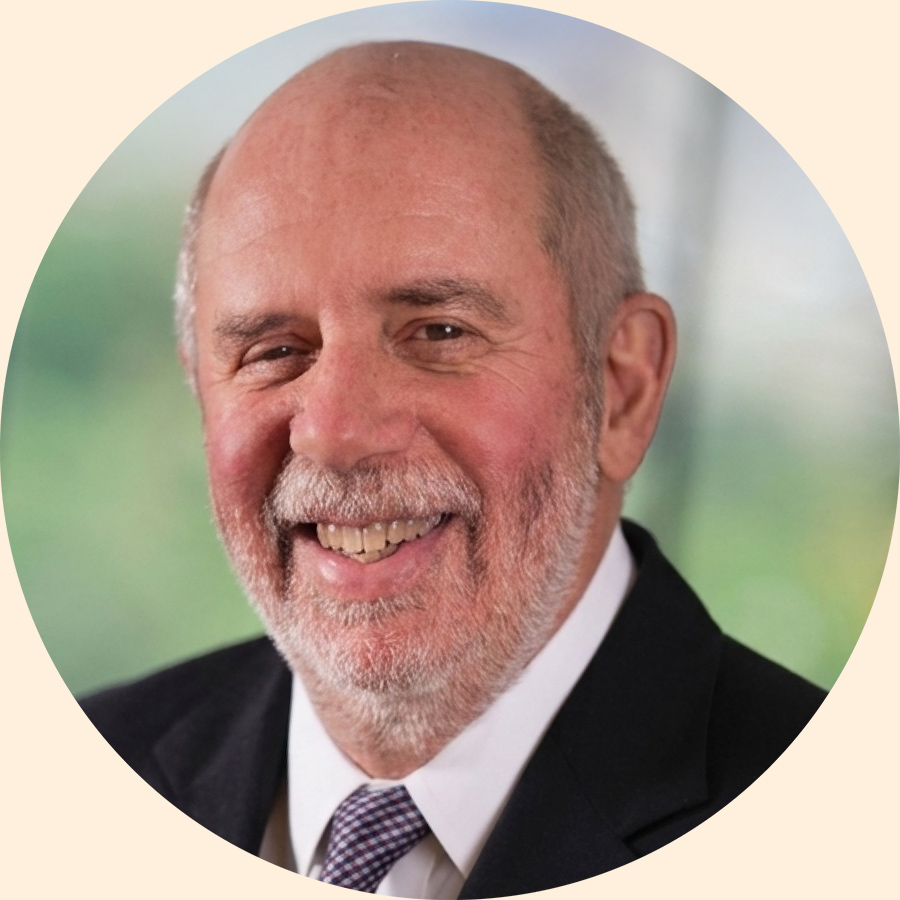
For Alexander, the work was personal. A first-generation American, and the first in his family to graduate from college, he arrived at Emerson with a spotty academic record, and unsure of his path forward.
“I came to Emerson to figure out who I could be, and Emerson gave me that chance,” he said. Mentorship from the late Professor Emeritus Walt Littlefield, a founder of the Political Communication program, inspired him.
“Walt took me under his wing and taught me the power of speech, advocacy, and argumentation,” Alexander recalled. “He gave me the confidence I needed at just the right time.”
At Emerson, Alexander studied speech, taught debate at Norfolk State Prison, and interned for the Boston Celtics. After graduation, he worked at leading advertising and PR agencies and managed a NYSE-member brokerage firm. Now, he’s an elected member of the Dutchess County Legislature in upstate New York.
“I believe Walt would be proud of what I have accomplished in terms of service, and that’s very gratifying for me,” he said.
That underdog story shaped his priorities as a longtime Trustee, including the creation of the Alexander Diversity Scholarship in 2008, rooted in a belief that Emerson’s mission to better society through arts and communication “requires all voices, all faces,” he said.
When Alexander became Board Chair in 2021, during a time of political change and pandemic upheaval, he set a clear agenda: Hire a new president, reorganize the Board to reflect younger leadership, introduce term limits, and develop a new strategic plan. All four are now in place.
The changes come as Emerson’s mission is more vital than ever, when creative expression is challenged and the very nature of truth is questioned, he said.
“We worked through a very difficult time together and we’ve come out of it stronger with a clear vision for the future of our college,” Alexander said. “We’ve reaffirmed our commitment to our mission and to being the leading school of arts and communication.”
Staying Ahead of the Industry

Emerson Los Angeles is one of the great success stories in the history of media education. Emerson pioneered the idea that students could spend a semester immersed in the entertainment industry while continuing their academic studies.
As an Emerson alum myself, it’s especially meaningful to help shape the next chapter of a program that has had such a profound impact on generations of students. ELA sits at the intersection of academic inquiry, creative practice, and professional development. Students don’t simply learn about the entertainment industry—they experience it firsthand through internships, mentorship, and direct engagement with the creative community that surrounds us.
The opportunity ahead is equally exciting. The entertainment industry is undergoing one of the most significant periods of transformation in its history. New technologies, new platforms, new forms of storytelling, and new pathways into creative careers are reshaping the landscape. ELA is uniquely positioned to build on its historic strengths while helping students understand, navigate, and ultimately lead that transformation.
Q: Where are the opportunities for growth?
My aspiration is for ELA to become the premier industry-integrated learning environment in higher education—a place where academic innovation, professional development, and industry engagement are fully integrated. I look forward to working closely with President Jay Bernhardt and Provost Alexandra Socarides on this goal.
Internships will always remain central to our mission, but today’s students need a broader ecosystem of opportunities: access to industry partnerships, experiential learning, mentorship, entrepreneurial thinking, and emerging areas of media innovation. They need opportunities to understand not only how entertainment has traditionally worked, but how it is evolving.
Los Angeles sits at the center of many of those changes. We are witnessing the rise of the creator economy, new forms of audience-driven media, advances in artificial intelligence, and entirely new models for developing and distributing content. ELA is uniquely positioned to help students understand those shifts and prepare them to lead within them.
I also see ELA becoming an even stronger hub, bringing together students, alumni, faculty, and industry partners to create lifelong connections and new opportunities for collaboration. My goal is to build on Emerson’s remarkable legacy while ensuring that ELA remains at the forefront of preparing students for the future of the creative economy.
Q: Can you talk more about that broader ecosystem of opportunities?
Internships remain one of the most valuable components of the Emerson experience, but they are no longer the only way students can gain meaningful industry experience.
One way we can do that is by creating experiences that connect students directly with industry partners. Students would not simply be studying the industry—they would be contributing to it.
ELA can also expand co-curricular experiences and can continue supporting recent graduates as they build networks, access mentorship, and establish themselves.
Q: Tell me a bit more about the relationship between Emerson Los Angeles and the academic program on the Boston campus.
One of the most exciting opportunities is strengthening the connection between the remarkable creative work happening in Boston and the extraordinary resources available in Los Angeles.
I’d like to see more opportunities for students to leverage ELA while developing major creative projects. Los Angeles offers access to production infrastructure, professional expertise, industry networks, and creative communities that can help elevate student work.
The entertainment industry increasingly rewards professionals who understand both the creative and business dimensions of media. ELA can help students better understand that broader ecosystem while creating opportunities to showcase their work to professional audiences.
Q: There’s a new Career Readiness Initiative at Emerson, as part of our strategic plan. Tell me how you see Emerson Los Angeles working with this new initiative?
I think career readiness should be viewed as a continuum rather than a destination.
ELA occupies a unique place in that journey because it sits where education and industry intersect. We help students translate what they have learned in the classroom into professional experience, industry relationships, and practical skills.
I am particularly excited about extending that support beyond graduation through mentorship, professional development, alumni engagement, and industry partnerships.
Q: How do you respond to prospective students or families who might be worried about the future of the film industry?
I think it’s important to be honest that we are living through a period of extraordinary change. The entertainment industry is being reshaped by technological innovation, changing audience behaviors, new business models, and emerging forms of storytelling.
What gives me confidence is not simply that change creates opportunity. It is that Emerson has spent generations preparing students to think critically, communicate effectively, collaborate creatively, and adapt to new circumstances. Those qualities become even more valuable during periods of rapid change.
Our responsibility is not simply to prepare students for the industry as it exists today. It is to prepare them for the industry that will exist five, ten, and twenty years from now.
Q: I know you’re closely following industry trends. What is ELA’s place in this new landscape?
I want ELA to be one of the places where the future of entertainment is actively discussed, tested, and built.
We are witnessing the emergence of new creative pathways that look very different from the traditional model of film school, festival, agency, and studio. Today, creators can build audiences directly through digital platforms and transform those audiences into intellectual property, businesses, and partnerships.
I believe ELA can become a bridge between the traditional entertainment industry and the emerging creator economy. We can help students understand both worlds and give them the tools to move confidently between them.
Ultimately, I want ELA to be a place where students don’t simply prepare for the future of media—they help shape it.
A New Take
It represented a bold statement about the future growth and excellence in one of Emerson’s most successful academic programs that has long shaped global storytelling.
“The creation of the new school reaffirms Emerson’s commitment to global leadership in communication and the arts,” President Jay Bernhardt said, noting Emerson’s decades-long track record in preparing students for success in film, television, and media arts and launching the careers of hundreds of award-winning creators and industry legends.
Today, SOF is delivering on its promise to invest not just in the future of arts education, but in the creative health of the entertainment industry.
“We recognize the need for an ever-evolving curriculum and student experience to match the fast-paced changes in the film, television, and media arts industry of the future,” said SOF Interim Dean Shaun Clarke, MFA ’12.
To that end, Clarke is working closely with Ken Rogers ’91, the inaugural dean of the Emerson Los Angeles (ELA) campus, to bolster opportunities and connections for students both in Boston and Los Angeles.
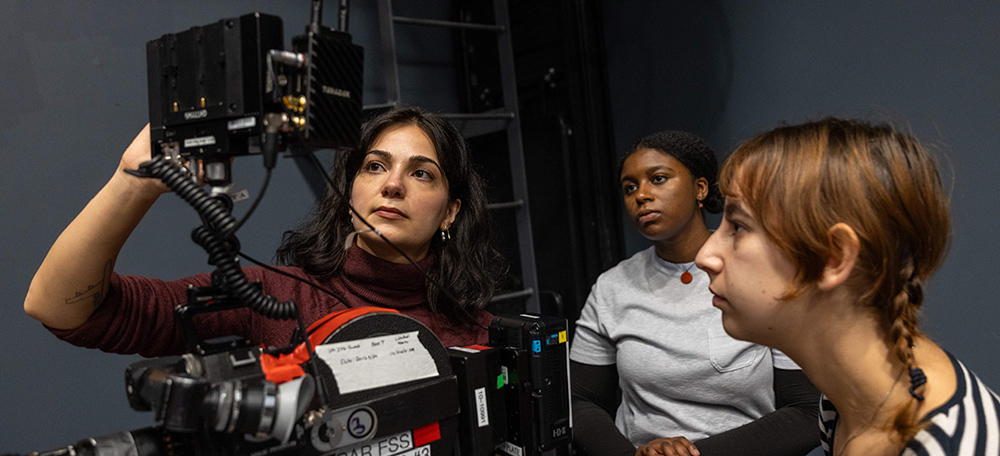
At the new SOF, students benefit from access to cutting-edge equipment, virtual production studios, ARRI certification, courses grounded in emerging technologies, and a leading faculty of creators and experts. Production facilities for XR (extended reality), VR (virtual reality), AR (augmented reality), and game design, all grounded in storytelling, equip students to thrive in an evolving media landscape.
Students choose from new and revised courses, and earlier this year, Emerson announced that beginning in Fall 2026, it will offer an updated BFA in Film, Television, and Media Arts. Additionally, in Fall 2027, the College is launching a new MFA in Media Industries degree.